By Right A Way Heating & Cooling |
Stop cooling and check for immediate danger
Turn cooling off at the thermostat if you can reach it safely. Do not walk through water to reach equipment or a switch. If water is near wiring, outlets, or an electrical panel, stay back and call for professional help. Do not open the air handler to find where the water begins.
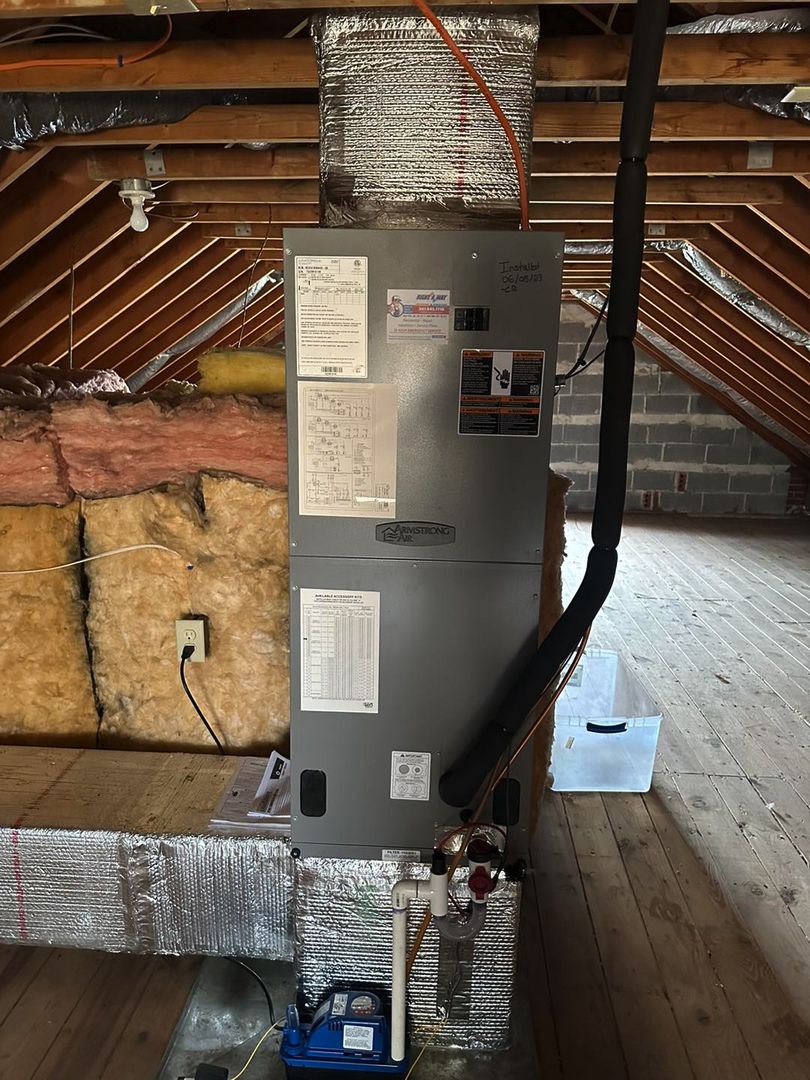
Keep people and pets away from the wet area. Move light belongings only if you can do so without touching equipment or stepping into unsafe water. If a ceiling is sagging or dripping below an attic unit, stay out from under it. Our AC leak and frozen coil service page can help you describe an urgent equipment concern.
Understand where normal AC water goes
As warm indoor air passes over a cold coil, moisture can collect on the coil and drip into a drain pan. From there, it should leave through a drain line or a condensate pump, depending on the setup. Humid weather can produce more water, but it should still stay in the intended path.
A leak does not automatically mean the refrigerant is low or that the entire unit needs replacement. The source may involve drainage, ice, a damaged pan, or another nearby plumbing line. Note where you first saw water and whether cooling was running. That is useful information without taking apart equipment to make a diagnosis.
A blocked drain line is one possible cause
Debris or growth inside a condensate drain can restrict water flow. Water may back up into a pan or trigger a safety switch that stops the system. A visible drain outlet that is not dripping is only a clue, since drainage varies with conditions and the equipment cycle.
Do not pour bleach, drain cleaner, or other chemicals into an opening unless the equipment instructions specifically call for that method. Do not use compressed air or disconnect pipes to try to force a clog through. A technician can assess the drain path and choose a suitable cleaning method. Tell us if the system stopped around the same time the water appeared.
A pump or pan may need attention
Some indoor units use a small pump to move condensate where gravity drainage is not practical. If that pump stops working or its outlet is blocked, water may collect nearby. A damaged or misaligned pan can also let water escape. These possibilities can look similar from outside the cabinet.
Do not reach into a pump tank or touch its wiring. Do not bypass a float switch to make the AC run again. That switch may be stopping the system to limit an overflow. Photograph the wet area only from a safe, dry location. Share whether you usually hear a pump and whether that sound changed before the leak.
Melting ice can create a sudden puddle
Ice on a coil or refrigerant line can melt after cooling stops. That can produce more water than the normal drain path handles at once. Restricted airflow and equipment faults are among the possible reasons for freezing. A clean filter alone does not rule out the other causes.
Leave cooling off and keep covers closed. Do not chip ice away, use a hair dryer, or pour hot water onto equipment. Do not add refrigerant or loosen lines. If water is near electrical parts, do not run the fan. Ask for guidance about thawing and restarting; a coil that has thawed may freeze again if the cause has not been addressed.
Check only the safe, visible air path
With the system off, look for furniture or rugs blocking return grilles and check that ordinary supply vents are open. If the filter is at a normal homeowner access point, follow the guide to inspect it safely. Replace it only with the listed size and suitable type, using the correct airflow direction.
Do not open a powered panel or reach past a filter into the cabinet. Avoid running the AC without a filter as a test. In older Frederick homes, airflow changes can be tied to room changes, blocked returns, or duct issues. Mention those details when arranging AC repair, even if the water is your main concern.
Protect the home without hiding the leak
Once cooling is off and the area is safe, you can place a towel on a dry, safe floor area to catch a small spread of water. Keep it away from equipment openings and electrical parts. Do not climb into an attic, crawl under a unit, or stand beneath a wet ceiling to place a bucket.
Record the size and location of the wet patch before cleanup if you can do so safely. Do not cover wet building materials and assume the problem is over. If water has entered a ceiling, wall, or floor, the building may need separate assessment and drying. Stopping the AC addresses only one part of the situation.
Arrange repair and a follow-up care plan
Tell Right A Way when the leak started, whether you saw ice, and whether the system shut itself off. Include the unit's location and any water near electrical parts. For Frederick County homes with attic equipment, mention ceiling staining even if you cannot see the air handler itself. Safe observations are enough to request help.
After repair, discuss routine HVAC maintenance and the drain checks suited to your system. Ask what signs should prompt another call. Contact Right A Way before restarting a system that has had repeat leaks or freezing. Do not treat an empty pan after cleanup as proof that the cause has been fixed.
Common questions
Can I keep cooling if the leak is small?
Turn cooling off if safe and arrange guidance. A small visible puddle does not show how much water may be inside a cabinet or building surface.
Does leaking water mean low refrigerant?
No. Drain, pump, pan, airflow, or freezing problems can be involved. Leave refrigerant checks and handling to a professional.
Should I bypass the drain safety switch?
No. The switch may be preventing an overflow. Leave it in place and have the drainage problem checked before normal operation resumes.
Related services
More homeowner guides
No heat or no AC?
Call to discuss your system and current service availability.
Call (301) 845-7710 Emergency HVAC help